This op-ed was originally published in the Commercial Appeal on March 17, 2026.
An empty desk. A locker cleared out. There is no explanation or announcement.
On Feb. 20 in Memphis, a high school student was taken into ICE custody while on his way to a school soccer game. One moment, he was a teammate, a classmate, a student preparing to take the field. The next, he was gone.
When a student disappears like that, the impact doesn’t stop with one child. Classmates grieve as though they’ve lost a loved one — because they have. Teachers are left supporting students who are anxious, distracted and struggling to process what happened. Attendance drops as families grow fearful about sending their children to school. And the ripple effects reach far beyond one classroom. When school communities are destabilized by trauma and chronic absenteeism, academic achievement suffers for everyone, even the students who continue showing up each day.
HB 793/SB 836 and HB 1711/SB 2108 seek to make this a reality in Tennessee classrooms and across the country.
What Tennessee’s immigration bills would require of schools
As amended, HB 793 would require schools to collect information to show students’ citizenship, immigration status or lawful presence. Each school must report that data to the Tennessee Department of Education (TDOE), including how many students provided documentation, what kinds and the reasons why others didn’t. Then, TDOE would send an annual report to immigration authorities and various state agencies.
HB 1711/SB 2108 would require local governments and public institutions — including schools, universities, hospitals and more — to report undocumented individuals who receive public benefits to immigration enforcement. Colleges and universities must also report the costs incurred for serving undocumented students.
A direct threat to a longstanding Constitutional right
While these bills don’t explicitly deny public education to undocumented students, they create dangerous data trails that target students based on their immigration status.
The Supreme Court has been clear: Schools cannot request documentation that could be used to deny enrollment to undocumented students. These bills do exactly that, quietly inviting a legal challenge to Plyler v. Doe, a longstanding legal precedent that guarantees all children living in the United States access to free public education regardless of immigration status.
While the legal threat exists, families and schools will feel the harm of this legislation long before any court process does.
Fear keeps families home — and learning suffers
HB 793 and HB 1711/SB 2108 don’t just threaten students’ right to an education; they create a costly burden for families and schools, administratively, psychologically and academically.
Under these bills, every family enrolling their child in school would be required to produce documents that have no bearing on whether their child is eligible to attend that school.
For many, that means navigating a complex, new system they have never encountered, resulting in additional time and money spent retrieving forms, replacing lost documents or waiting for paperwork that may not arrive before the school year begins. Some families with children who are U.S. citizens may not have access to official documents due to natural disasters, homelessness or other circumstances.
Families won’t wait to be turned away. When a parent fears sending their child to school, it may put their family at risk, and many may simply stop sending them.
Turning educators into immigration lawyers
Collecting and reporting the immigration status of every student pulls schools away from their core mission: educating children. Staff will need dedicated time and professional development funds to understand the intricacies of more than 185 visa categories, each with varying durations.
They will then have to learn how to collect, verify and report the documentation students present. Tennessee’s more than 106,000 English learners may mean that some districts will also need to translate and communicate this system to families in their home languages, piling onto school staff who are already stretched thin serving nearly 1 million students across the state.
Every dollar spent on compliance is a dollar not spent in the classroom. Every hour a school administrator spends on paperwork is an hour they are not supporting the students who need them most. Our teachers and school staff should be focused on educating students, not training to become immigration lawyers.
Tennesseans are watching. Legislators need to hear from them.
Both bills are scheduled for hearings this week, and thousands of Tennesseans are watching. We need you with us. Talk to your friends, family and neighbors, and contact your legislator. Let them know that Tennessee’s students are counting on them.
Strong schools build stronger communities: more civically engaged, more economically mobile and healthier.
If we want Tennessee to thrive, our focus needs to be on expanding access to education. And regardless of the vote count, EdTrust-Tennessee and the Education for All-Tennessee coalition remain committed to doing just that.
HB 793/SB 836 and HB 1711/SB 2108 won’t make Tennessee’s classrooms safer or stronger. They will inject fear into school communities and pull educators away from their central mission: helping students learn. Tennessee’s future depends on strong schools — and strong schools depend on policies that keep students in classrooms and learning.
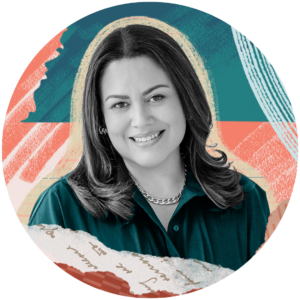
Alexza Barajas Clark, PhD, is the Executive Director at EdTrust-Tennessee, advancing education equity from preschool to college through student-centered, community-driven, data-informed policy solutions. Follow her on LinkedIn. EdTrust-Tennessee is also a member of the steering committee of Education for All-Tennessee, a movement to defend the right to public education.